
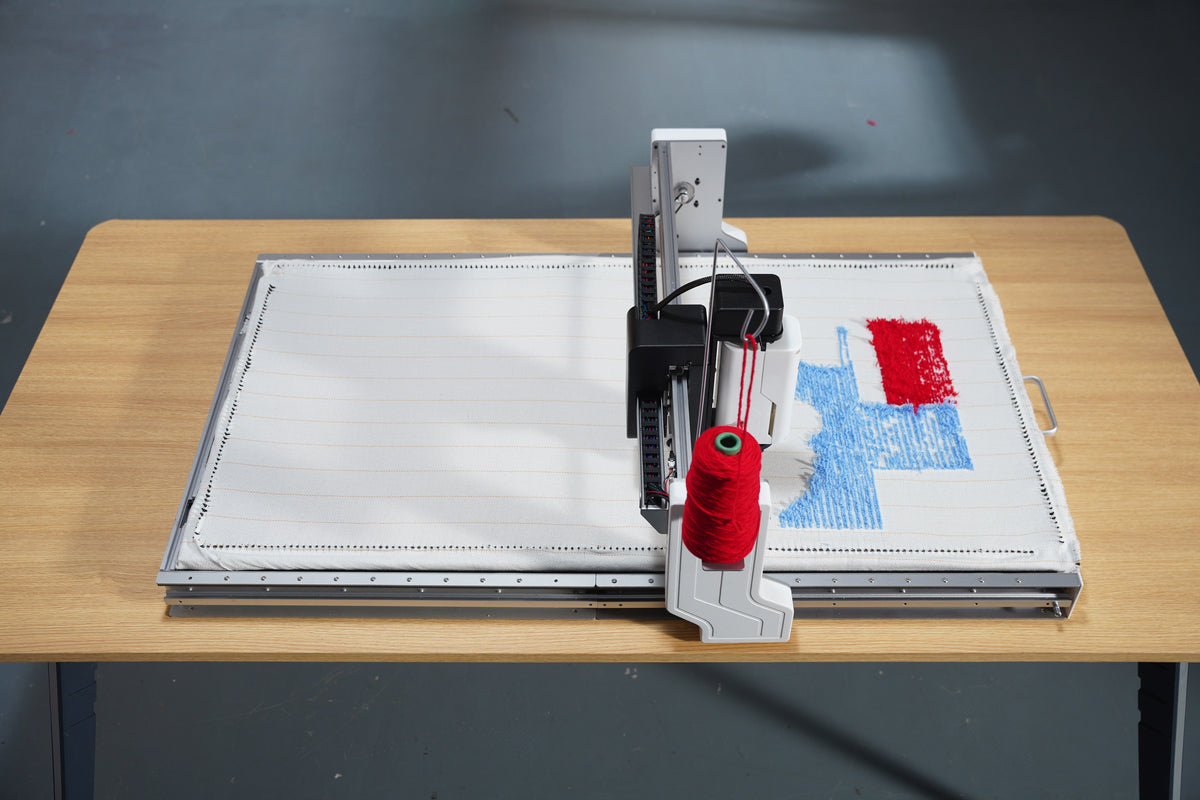
For most makers, yes. Home tufting doesn't require a dedicated workshop or heavy protective gear—just a tidy setup, good airflow, and practical habits tailored to the equipment and finishing materials you use.
Yarn dust and loose fibers
Loose fibers show up at two stages: tufting and trimming.
- During tufting: On an upright frame, shed fibers scatter onto the floor and nearby surfaces. With Craftphilia’s desktop machine, the frame mounts directly onto the base, keeping most loose fibers contained underneath. Once a run finishes, lift the frame and vacuum the base rather than cleaning the whole room.
- During trimming and carving: This is where most airborne fibers are released, regardless of your tufting equipment. Vacuum or wipe down your table and floor when you finish—avoid shaking the rug or blowing fibers into the air.

Rug glue fumes—and glue-free alternatives
Traditional liquid rug glues often produce noticeable fumes while applied and drying. If you use liquid backing adhesive, choose one made for rugs, work with fresh air circulating, keep the container sealed between uses, and keep kids and pets away until the backing cures completely.
If you want to skip liquid fumes and long drying times altogether, heat-activated backing is a cleaner alternative. Pairing a large-format glue sheet with a heat press bonds the rug backing quickly and evenly without liquid glue. Craftphilia’s heat press and glue sheet system is coming soon for makers looking for a faster, lower-odor finishing step.
For the complete post-tufting process, read our guide to rug finishing.
Tool safety: handheld guns vs. automated machines
How you manage equipment safety depends on whether you guide the tool by hand or run a fixed desktop unit.
- Handheld tufting guns put you in direct control of pressure, angle, and pacing. Because you hold and steer the tool throughout the session, safety comes down to steady handling and ergonomics: set your frame at a comfortable height, keep the cloth evenly stretched, take breaks to avoid wrist and shoulder strain, and switch off the gun before clearing a jam.
- Desktop automated machines shift the focus from physical handling to workspace prep. Because the unit sits fixed on a table and follows a path generated in Craftphilia Studio, it removes the risks tied to hand fatigue, grip slips, or accidental trigger pulls—and lets you step away from the immediate noise and fiber zone while it runs. In exchange, pre-run checks matter more: place the machine on a stable surface, keep its operating path clear of clutter, and make sure children or pets cannot reach the unit while you are away.
Frame setup is another often-overlooked detail. Traditional wooden frames rely on sharp metal carpet tack strips to hold the cloth, which can easily nick your fingers or wrists while stretching fabric. Craftphilia’s frame replaces nails and tack strips with rounded, outward-angled teeth, so you can stretch the cloth firmly without exposed metal spikes or heavy hammering.
For a broader look at how both workflows compare, see Tufting Gun vs. Automated Tufting Machine.
Quick home safety checklist
- Set up your frame or machine on a stable surface with clear space around it.
- Turn off power before adjusting equipment or clearing yarn jams.
- Vacuum loose fibers after tufting and trimming instead of shaking them into the air.
- Ventilate your room when using liquid backing glue, or switch to a heat-activated glue sheet.
- Keep children and pets away from running equipment, sharp shears, and uncured adhesive.
Frequently asked questions
Can you tuft in a bedroom or small apartment?
Yes, but plan around fabric surfaces. Loose yarn fibers cling easily to bedding, curtains, and rugs, so avoid trimming near your bed and vacuum the area right after a session. If space and airflow are limited, a contained desktop setup and a heat-activated glue sheet help keep both fibers and odors under control.
Is rug glue toxic?
Most liquid rug adhesives release noticeable fumes while wet and curing, which is why good ventilation matters. Once fully cured according to the label, the backing is generally safe for everyday indoor use. If you want to avoid liquid fumes altogether, a heat-activated glue sheet is a cleaner alternative.
Is tufting safe for kids?
Handheld tufting guns are heavy and fast, making them better suited for older teens and adults. Younger children shouldn't operate a gun or reach near a running automated machine, though they can safely help with design sketching or picking yarn colors away from the equipment.

Share:
How Tufting Turns Yarn Into a Rug