

Yes. Tufting is still popular in 2026, and it has outlasted the trend that made it famous. Searches have held steady, studios are still opening, and plenty of people who picked up a gun during the pandemic are still at it six years later.
Some of the early excitement has settled, as it does with anything that spreads fast online. But a tufted rug was never a viral moment you had to catch in time. It's something you make, put on your floor or your wall, and live with every day — long after the video that made you want one has scrolled past.
So the better question is what you want from it. Here's what popular looks like now, and what that means if you want tufting as a hobby, a shop, a studio, or a way to make more of your ideas.
What changed after the boom
The boom was real, and so was the shakeout that followed it.
Tufting took off in 2020, when the pandemic kept people at home and short videos gave them the idea. Guns sold out faster than suppliers could restock them, and studios opened in city after city, some fully booked for months.
Then the novelty wore off. In Singapore, where studios multiplied quickly after tufting arrived in late 2021, several have since closed or paused. The ones that went first were mostly built around a single visit: someone comes once, makes one rug, posts it, and doesn't come back.
What's left looks different from the peak — and in some ways stronger:
| Where to look | What it shows in 2025–2026 |
|---|---|
| Search | Searches for tufting on Etsy holding roughly steady month to month, without big seasonal swings |
| Studios | A tufting studio in most major US cities; in parts of Europe the craft arrived only in the last few years, and studios there were still expanding in late 2024 |
| Craft classes | Listed alongside knitting, clay and candle making at general craft studios |
| Community | Around 44,000 members in r/Tufting, Reddit's main tufting forum, in 2026 — and thousands more joining each year |
| Beyond the feed | Tufting equipment in UK university textile departments, tufted wall pieces in hotels and offices, tufted art in galleries |
That's what a craft looks like after a trend: fewer people find it by accident, and more of the ones who find it stay.
If you want it as a hobby
You're arriving at the best time so far. Almost everything that made tufting hard to start in 2020 is easier now.
- Tools cost less, and there are more of them. Entry-level guns that sold for close to $300 in 2020 now commonly sell for $100–200, and complete starter kits are easy to find (our full cost breakdown). There are also automated machines that do the tufting, so anyone can turn an image into a finished piece (how they work).
- Help is easier to find. Early tufters often started with a gun, a manual they couldn't read and almost no tutorials. Now there are local classes, open studio hours, and years of answered questions online.
- You can try it before you buy anything. A beginner class typically costs $90–175 and sends you home with a finished piece — the cheapest way to find out whether you like the work as much as the videos.
- It's no longer just rugs. The same tools now make wall art, shaped pieces, carved relief and panels for cushions and bags (tufting beyond rugs).
Whichever tool you start with, it helps to know what your first few pieces will ask of you. How difficult tufting really is walks through both routes. If you're still choosing a craft, see tufting vs punch needle, latch hook and rug hooking.
If you want to sell what you make
The crowded part of the market is the cheap custom rug. The open part is work people can't get anywhere else.
Search Etsy for "custom tufted rug" and you'll find plenty of sellers, with prices starting as low as $30–60. Most custom tufted rugs there, though, are priced above $100 — and buyer interest in them has held up through 2026.
What still sells at a fair price is specific: a portrait of the buyer's own pet, a piece made to fit a particular room, a series in a style people recognise as yours. These are harder to copy and easier to price, because the buyer isn't comparing you to the cheapest thumbnail on the page. What actually sells and custom pet portrait rugs go into the details; how to price your handmade rugs covers the number itself.
Two things matter more than whether the trend is up or down:
- Steady output. Shops that list new work regularly and ship on the promised date get found more often.
-
Where you sell. Etsy, Instagram and your own site each find buyers in a different way. Most makers start with an Etsy shop and add the others later (where to sell tufted rugs).

If you're thinking about teaching or opening a studio
Workshops pay when people come back, not when they come once.
This is where the end of the hype hits hardest. A beginner class looks expensive to the customer, but a studio's costs are high too: rent, yarn, glue, backing, and several hours of teaching per person. At typical class prices of $150–175, materials and teaching time use up most of what a single visit brings in.
The studios that lasted past the peak tend to share three things:
- Group bookings. Team events, birthdays and private parties fill a whole session at once.
- Return makers. Open studio hours for people who've done the beginner class and want to keep using the equipment.
- More than one kind of class. Kids' sessions, school programmes, advanced classes, or other crafts alongside tufting.
A plan that depends on people discovering tufting for the first time depends on the novelty. A plan that depends on people coming back doesn't.
If you have more ideas than hours
For a beginner, the first barrier is the hours. A first hand-tufted rug can run 15–20 of them and still be a practice piece. For makers who already have the skill, the ceiling is how many pieces those hours allow. A shop needs new listings. A custom order means a new design every time. A hobbyist with a long list of ideas finishes one every few weekends.
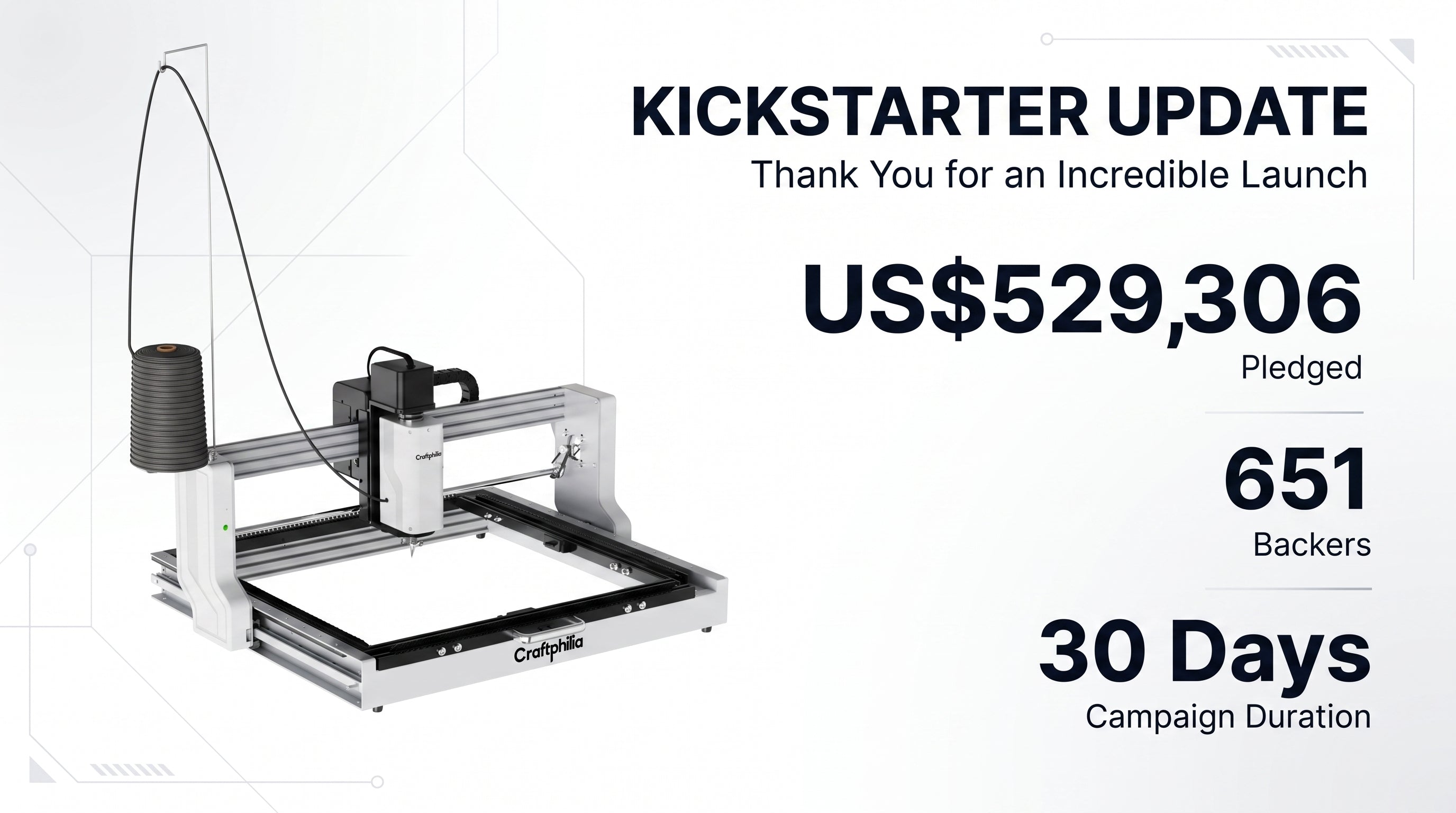
This is where an automated tufting machine changes the numbers. Bring an image into Craftphilia Studio: it separates the image into yarn colours, generates the tufting path, and shows you that path over your design before the first stitch. The machine then tufts the design in one to five hours. It pauses at each colour change for you to swap yarn and runs on its own in between.
The design and the finishing stay with you; the hours of execution come off your hands. So a first piece can be the design you actually wanted, not a practice run.
For sellers, the machine follows the lines of the image you give it and works as steadily on a one-off as on a design you've made fifty times. That makes pet portraits, name rugs and commissions worth taking at a price the customer will actually pay (how pet portrait rugs are made and priced). When a design sells more than once, every piece comes from the same file, so a reorder comes out like the first one (making multiples).
For how the machines work and how they compare to a gun, see our complete guide to automated tufting machines and tufting gun vs automated machine.
So, is it too late?
Only if you were hoping to ride the novelty.
If what you wanted was to be early — to post a rug and have people stop because they'd never seen one — that moment has passed. If what you want is to make things, sell work people can't get elsewhere, or build something that lasts, 2026 is a better time to start than 2020.
Tufting is now a craft people take up the way they take up knitting: the tools cost less, there are classes and studios to learn in, and a community has spent years answering the questions you're about to ask.
Frequently asked questions
Is tufting just a fad?
The viral phase was. The craft isn't new: tufting machines date back to the 1930s, and the hand-held gun has been used in carpet making for decades. What changed in 2020 was that anyone could buy one — and that part hasn't gone away.
Can you still make money tufting in 2026?
Yes. Makers who earn steadily usually sell something specific — pet portraits, room-specific pieces, a recognisable style — or teach, rather than competing on the lowest price. See how to price your handmade rugs.
Is tufting hard to learn?
The basics take one afternoon class. Getting even pile and clean lines takes longer, and a first hand-tufted rug can run 15–20 hours. See how difficult tufting really is for the full picture.
How much does it cost to start tufting?
A gun setup with yarn, cloth, glue and backing typically runs $395–895, depending on whether you take a class first. See the full cost of starting to tuft.
Should I start with a tufting gun or a machine?
If the making itself is what you're after, start with a gun. If you have more ideas than hours, and finished pieces are the point, a machine is built for that. Compare both in tufting gun vs automated machine.
Share:
Tufting vs Punch Needle vs Latch Hook vs Rug Hooking: Which Craft Should You Try